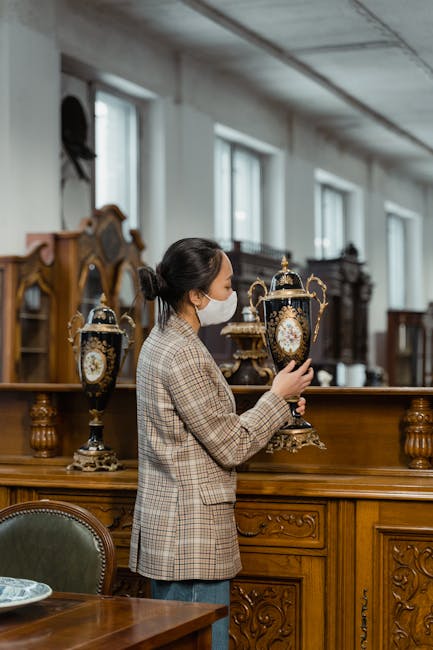
Moving antiques in Wapping: damage prevention strategies
Antiques do not move like ordinary furniture. They can be brittle, oddly weighted, sensitive to vibration, and full of tiny weak points that only show themselves when a box is turned the wrong way on a stair landing. If you are planning moving antiques in Wapping: damage prevention strategies are not a nice extra; they are the difference between a careful relocation and a costly mistake. In a place like Wapping, with tight access, period buildings, and plenty of stairs, corners and narrow hallways, the margin for error is small. This guide walks you through how to protect antique pieces properly, what the risks really are, and when professional help makes sense.
We will look at packing methods, route planning, loading technique, storage decisions, and the small habits that save a lot of grief later. And yes, a few of these details feel fussy at first. But honestly, antiques reward fussy. They really do.
Why Moving antiques in Wapping: damage prevention strategies Matters
Antiques are usually valuable in more than one sense. There is the financial value, of course, but also the family history, the craftsmanship, and the irreplaceable character that comes with age. Once a carved leg chips, a veneer lifts, or a joint loosens, you cannot simply buy back the original condition. That is why damage prevention matters more than speed.
Wapping adds a few local complications. Flats may have awkward stairwells, riverside apartments can have restricted parking, and older buildings often mean narrow entrances or uneven thresholds. Even if a piece is not especially large, it can still be awkward to get out safely. A cabinet might be light enough for two people, yet fragile enough that one rushed turn becomes a problem. You know the sort of thing: one second you are moving carefully, the next the doorframe is suddenly too close for comfort.
It also helps to think about the hidden risks. Damage does not only happen when something is dropped. It can come from rubbing, compression, vibration in transit, damp storage, or poor wrapping that traps grit against a polished surface. A good moving plan reduces all of that. If you are already organising the wider move, it is worth pairing this advice with broader planning from transforming packing stress into moving success and the calmer overall approach discussed in tips for a serene house move journey.
How Moving antiques in Wapping: damage prevention strategies Works
The basic idea is simple: reduce movement, reduce friction, reduce pressure points, and keep the item stable from the moment it is wrapped until it is placed in its final position. In practice, that means a sequence of careful actions rather than one single trick.
Start with identification. Not every antique needs the same treatment. A Georgian side table, a painted chest, a mirror with original glass, and a grandfather clock all behave differently. Look at what is fragile, what can be removed, and what should stay fixed. Loose drawers, shelves, keys, ornaments, and detachable feet should be packed separately and labelled in plain language. No mystery boxes, please. Future-you will not enjoy guessing.
Next comes surface protection. Soft, clean wrapping materials help guard against dust and abrasion. But the wrapping must be chosen with care. Some finishes can react badly to certain plastics, moisture, or sticky tapes. The outer layer should protect, not trap. Then comes support: corners, edges and protruding carvings need extra padding so they do not take the first hit when the item moves through a doorway or settles into the van.
Loading is where a lot of the real skill sits. Antiques should be kept upright where possible, strapped securely, and positioned so they cannot slide. Heavy pieces need proper weight distribution in the vehicle. Lighter fragile items should not be stacked under anything that can compress them. This is where a measured approach matters more than brute force. If you want a practical sense of safe handling and body mechanics, the article on kinetic lifting and strength with science is a useful companion read.
Finally, the destination matters just as much as the journey. Antiques should not be dumped in the first available corner. They need space to acclimatise, a dry environment, and careful unpacking. If the move is part of a larger declutter or staging process, taking time beforehand with a stress-free declutter plan can make the antique move far easier too.
Key Benefits and Practical Advantages
Careful antique moving is not just about avoiding disaster. It creates a smoother, calmer move overall. That alone is worth something. But there are more practical advantages too.
- Lower risk of irreversible damage: proper wrapping and loading reduce chips, scratches, splits, and movement-related wear.
- Better control in tight spaces: antique items often need slower, more deliberate handling through Wapping staircases, hallways, and door frames.
- Less stress on the day: when the packing method is sorted in advance, the move feels more manageable.
- Improved insurance position: clear preparation and sensible handling support better documentation if anything unexpected happens.
- More efficient unpacking: labelled parts, separate fixings, and organised wrapping make reassembly easier.
There is also a subtler benefit: confidence. Once you know an antique has been prepared properly, every step feels less frantic. That matters when you are balancing parking constraints, lift bookings, and people arriving at different times. It is one less thing to worry about, and let's face it, moves always have enough to worry about already.
Who This Is For and When It Makes Sense
This approach makes sense for anyone moving items that are old, fragile, ornate, valuable, or sentimentally important. That includes private homeowners, landlords handling furnished properties, collectors, family members dealing with inheritance pieces, and downsizers moving from a larger home into a flat. In Wapping, it also matters for people moving into period conversions or riverside apartments where access is not especially forgiving.
You may especially need this level of care if your antiques include:
- carved wooden furniture
- inlaid cabinets or sideboards
- mirrors with aged glass
- porcelain, ceramics, clocks or lamps
- painted pieces with delicate finishes
- items with loose joints, veneers, or repairs already in place
Sometimes people assume an item is "just old furniture" and treat it like a modern flat-pack unit. That is where problems start. A side table that has held up for eighty years can still split if the wrong corner takes a knock. Age does not make a piece indestructible. It usually means the opposite.
If your move involves other specialist items too, it may help to compare the process with guidance on the art of moving pianos or with local logistics advice for a waterfront move checklist. Different objects, same principle: protect the item before you think about speed.
Step-by-Step Guidance
Here is a practical, field-tested way to approach antique moving without overcomplicating it.
- Assess each item individually. Check for loose joints, previous repairs, fragile handles, lifting points, and any visible weakness. Photograph the item from several angles before anything is wrapped. It is simple, and genuinely useful.
- Remove anything detachable. Shelves, keys, drawers, glass panels, small ornaments and removable feet should be taken off where possible and wrapped separately.
- Choose clean, appropriate packing materials. Use soft wraps, corner protection, sturdy cartons, and good-quality tape. Keep adhesive off surfaces where it may leave marks.
- Protect the surface first. Wrap the item so the outer layer cannot rub against the finish. If the item is painted or varnished, avoid anything that might scuff or mark it.
- Pad the weak points. Corners, handles, carved details and glass should get extra cushioning. A loose wrap is not enough. It should be snug, but not tight enough to compress the piece.
- Use the right carrying technique. Two people should lift in sync. Keep the item close to the body, take small steps, and avoid sudden twists. If stairs are involved, pause at landings and reset your grip.
- Secure the load in the vehicle. Strap the piece so it cannot tip or slide. Separate antiques from hard edges and heavier items.
- Unwrap carefully at destination. Remove layers slowly and check for pressure marks or movement-related damage before the piece is placed permanently.
If the item is especially large or the access is awkward, it can be smarter to book a professional team with the right vehicle and equipment. A local removal van in Wapping is often more practical than trying to force the job into a smaller setup. And if you need broader help, the wider removal services in Wapping page gives a sense of the support available.
Expert Tips for Better Results
There are a handful of details that tend to make the biggest difference. These are the things people forget when they are in a hurry.
- Never use old, dirty blankets directly against delicate finishes. Dust and grit can do real harm, especially to polished wood.
- Keep humidity in mind. Antiques do not like being left in a damp hall, basement or storage unit for long. If temporary storage is needed, choose somewhere clean and dry, such as storage in Wapping that fits the item properly.
- Label every separate part. A box marked "cabinet screws" is fine. "Bits" is not.
- Do not overwrap a piece and trap movement inside the layers. Too much soft material can shift and create pressure points.
- Allow time for awkward exits. If your property has a tight corner or narrow hallway, measure before moving day. This is one of those boring jobs that saves a lot of drama later.
- Use pause points. A brief stop on a stair landing is better than a rushed turn that scrapes a rail or baseboard.
One small but important habit: keep a clear "no staging" zone where the antique can rest while you handle the rest of the move. Too many items crowding one hallway is a classic way to cause accidental knocks. A moving day gets noisy, a bit chaotic, and people start saying "just a second" far too often. That is when mistakes creep in.
For a broader packing strategy, the guide on professional advice for bed and mattress moving is a surprisingly helpful read because the same careful principles apply: support, shape, protection, and clean handling.
Common Mistakes to Avoid
Most antique damage is not caused by one dramatic event. It usually comes from several small errors piling up. Here are the ones to watch.
- Packing too late: rushing on the morning of the move leads to weak wrapping and poor labelling.
- Using the wrong materials: sticky tape on a finish, rough blankets on a polished surface, or boxes that are too weak for the weight.
- Leaving drawers and doors loose: they swing open, change balance, and put stress on hinges.
- Dragging items instead of lifting them: even a short drag can scratch floors and jolt joints.
- Ignoring weather and moisture: a wet doorstep or damp van floor is a risk multiplier.
- Forgetting to measure access: one centimetre can matter more than you expect, annoying as that is.
- Stacking heavy items on top of antiques: never a good idea, even for a short trip.
The biggest mistake of all? Assuming "careful enough" is the same as "safe enough". It usually is not. Antiques often fail at the weak point you cannot easily see. A hairline crack, a previous repair, a slightly loose leg-those are the things that turn a normal lift into a repair job.
Tools, Resources and Recommendations
You do not need a warehouse full of specialist kit, but a few right-sized tools make antique moving much safer. In most cases, the following are the practical essentials:
| Tool or material | What it helps with | Why it matters |
|---|---|---|
| Soft wrapping blankets | Surface protection | Reduces scratches and scuffs during handling |
| Corner protectors | Sharp edges and weak points | Prevents knocks to the most vulnerable areas |
| Straps and ties | Load security in the van | Keeps the piece stable in transit |
| Sturdy cartons | Detached parts and accessories | Stops small components from getting lost or crushed |
| Moving dolly or trolley | Transport through level ground | Reduces manual strain and awkward carrying |
For larger household moves, it is often sensible to combine specialist packing with general removal support. If that is your situation, you may find packing and boxes in Wapping a useful starting point, and furniture removals in Wapping a practical option for the bigger pieces around the antiques. If your move is part of a flat relocation, flat removals in Wapping can also be relevant because access and stair handling often shape the whole plan.
There is also value in checking the company's operational basics before booking. Their health and safety policy, insurance and safety, and about us information can tell you whether the team takes the right kind of care. Not glamorous, perhaps, but useful.
Law, Compliance, Standards, or Best Practice
For most people moving antiques privately, there is no special antique-moving law to memorise. The real issue is general duty of care, sensible handling, and making sure the move is carried out safely and responsibly. In the UK, that usually means following normal manual handling best practice, using equipment correctly, and being honest about what the team can safely move.
If you are hiring movers, best practice is to check that they have suitable vehicle cover, clear terms, and appropriate insurance arrangements for the work they are doing. Insurance wording can vary, so do not assume everything is covered in the same way. Ask direct questions. Boring questions, yes. Necessary questions, absolutely.
For your own peace of mind, it is sensible to keep an inventory, take photographs, and note any pre-existing marks or repairs before collection. That is not about being difficult; it is about clarity. If a valuable antique has a scratch already, nobody wants to argue about where it came from afterwards.
It is also sensible to keep the move within the movers' stated terms and conditions, and to read the relevant details around payment and booking before you commit. The pages on terms and conditions and payment and security are worth a look if you are arranging a service. If you want the background on how the business presents its approach to responsible practice, recycling and sustainability and the modern slavery statement also reflect broader operational standards.
Options, Methods, or Comparison Table
Not every antique needs the same moving method. The right choice depends on the item, the access, and the level of risk. Here is a practical comparison.
| Method | Best for | Strengths | Trade-offs |
|---|---|---|---|
| DIY with careful packing | Small, sturdy antiques and short local moves | Low direct cost, flexible timing | Higher risk if access is awkward or the item is fragile |
| Two-person manual carry with equipment | Medium items with manageable weight | Better control, more stability | Still needs good planning and enough space to manoeuvre |
| Professional removals team | High-value, heavy, awkward or family heirloom pieces | Experience, handling skill, vehicle security | Higher cost, must book ahead where possible |
| Temporary storage before final placement | Moves with timing gaps or renovation work | Reduces rush, protects items during transitions | Requires suitable dry storage and clear inventory |
In simple terms, the more fragile or valuable the antique, the less sense it makes to improvise. If you are moving a family piece through a tricky building, the safest option is usually the least dramatic one. Calm planning wins. Every time, if you ask me.
Case Study or Real-World Example
Here is a realistic example based on the kind of move people often face in Wapping.
A couple downsizing from a larger riverside flat had three pieces they were especially worried about: a late-19th-century sideboard, a mahogany mirror, and a small writing desk with delicate inlay. The building had a narrow staircase, a timed loading bay, and not much room to turn corners. Nothing wild, but enough to make everyone a little tense by 8:15 in the morning.
Instead of trying to rush the move, the team measured the widest points in advance, removed the mirror and drawer components, padded the sideboard corners separately, and mapped the route out of the property before lifting anything. They used clean wrapping layers, made sure the furniture stayed upright, and stopped at the first landing to reset grips before the final descent. The items were then strapped securely inside the van and unloaded straight into a dry room at the new property.
Nothing dramatic happened. Which is the point. The best antique move often looks boring from the outside. No scraping sounds. No sudden panic. No last-minute "can we just angle it?" There is a kind of relief in that quiet success. The sideboard went in intact, the mirror stayed secure, and the clients were able to focus on the rest of the move instead of making phone calls to a restorer.
Practical Checklist
Use this before moving day. It keeps things grounded.
- Photograph each antique from multiple angles
- Check for loose joints, cracks, or previous repairs
- Remove detachable parts and label them clearly
- Choose clean, soft wrapping materials
- Protect corners, edges, handles and glass
- Measure doorways, stairs and tight turns
- Confirm who will lift, who will guide, and who will load
- Clear hallways and stairwells of clutter
- Reserve safe space inside the van for upright transport
- Keep a dry, clean place ready at the destination
- Inspect each item after unloading before final placement
One useful final check: if the piece is too awkward, too valuable or too emotionally important for a "we'll manage" approach, stop and reassess. That is not defeat. That is judgement.
Get a free quote today and see how much you can save.
Conclusion
Moving antiques in Wapping takes more than strength and a van. It takes respect for the item, patience with the building, and a steady hand all the way through. The best damage prevention strategies are simple in principle but exacting in practice: assess carefully, wrap properly, lift smoothly, secure the load, and never rush the last few feet. That is where damage tends to happen.
If you are moving a treasured piece, do not treat it like an ordinary box of household bits. Give it the preparation it deserves, and the move becomes far less stressful. In a neighbourhood where access can be fiddly and the buildings often have a bit of character, that careful approach pays off. Quietly, but properly.
And when it is all done, there is nothing quite like standing back and seeing the piece in its new place, safe and intact, ready for the next chapter.
Frequently Asked Questions
How do you move antiques without damaging them?
Use clean protective wrapping, remove loose parts, pad corners and fragile details, lift with care, and secure the item upright in the vehicle. The key is preventing movement and friction at every stage.
What is the best packaging for antique furniture?
Soft blankets or specialist protective wraps work well when used cleanly and correctly. The important thing is to avoid rough, dirty materials and anything that could scratch or react with the finish.
Should antique drawers and shelves be removed before moving?
Yes, where practical. Removing detachable parts reduces strain on joints, lowers the risk of breakage, and makes the main piece easier to handle safely.
Can antiques be moved in the rain?
Yes, but only with extra care. Keep items covered, minimise time outside, and make sure the floors and vehicle interior are dry. Moisture is a bigger enemy than many people realise.
Is it better to hire professional movers for antiques?
For fragile, valuable, very heavy, or awkward antiques, professional movers are usually the safer choice. They bring experience, equipment and a better understanding of load security.
How do I know if an antique is too fragile to move myself?
If the piece has loose joints, fine ornamentation, glass, veneer lifting, or previous repairs that look delicate, it is a strong sign that specialist handling is needed.
What should I do if my antique has pre-existing damage?
Photograph it clearly before the move and note the issue in writing. That helps everyone understand the item's condition and avoids confusion later.
Do I need special insurance for moving antiques?
It depends on the value and the mover's cover. Always ask what is included, what is excluded, and whether the item's value is handled in the way you expect.
How far in advance should I plan an antique move?
As early as possible, especially if access is tight or the item needs disassembly. A bit of lead time makes measuring, packing and scheduling much easier.
Can antiques be stored before the move or after delivery?
Yes, but storage should be dry, clean and suitable for delicate wood, finishes and fabrics. Avoid damp spaces, temperature swings and overcrowded storage conditions.
What is the biggest mistake people make when moving antiques?
Rushing. Most damage comes from hurried packing, poor lifting, or underestimating how awkward an item becomes when it meets stairs, corners or a narrow doorway.
How do I prepare a Wapping property for an antique move?
Clear the route, measure the access, protect floors if needed, and make sure parking or loading arrangements are sorted in advance. Wapping properties can be charming, but they are not always forgiving.